The Enigma of Purple Eyes
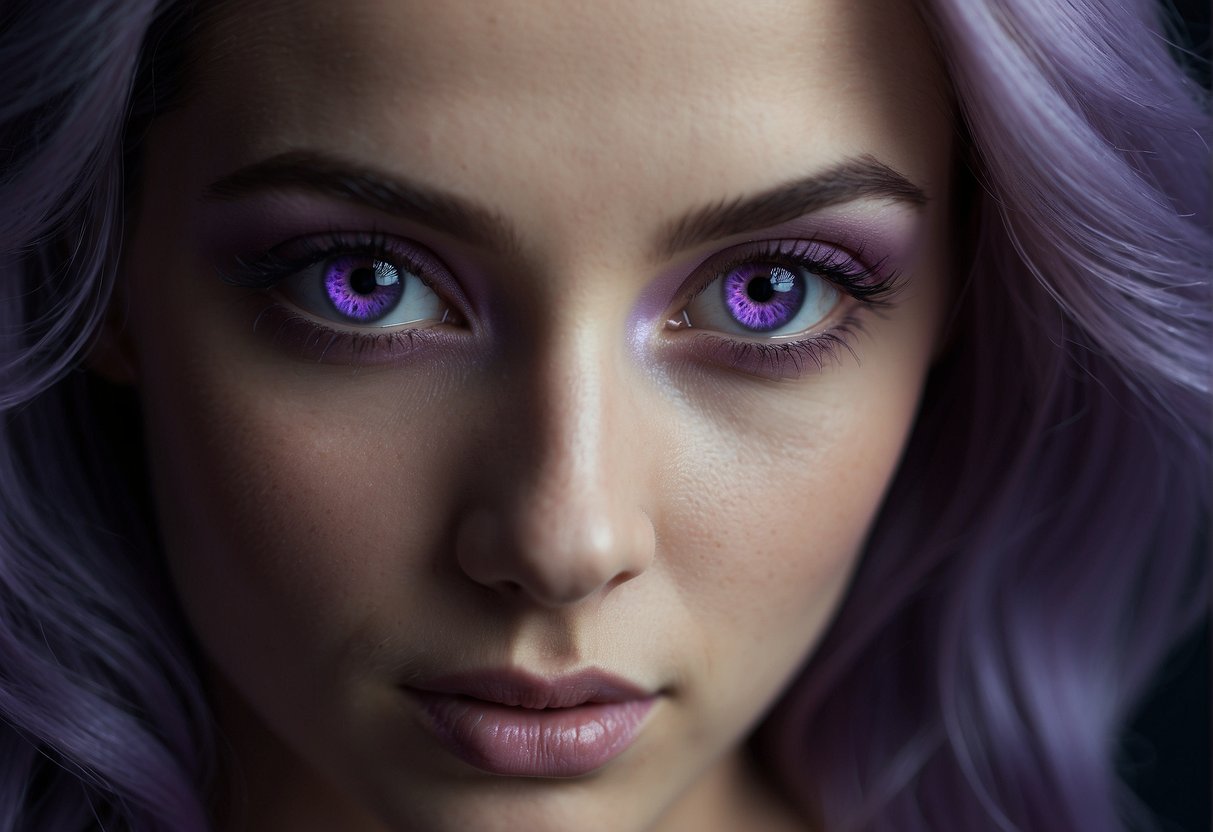
Purple eyes, a trait so rare it has captivated the imagination of many, is a phenomenon that sparks both curiosity and awe in those who encounter it. The phrase "Purple Eyes A Rare And Captivating Phenomenon" itself has become synonymous with the extraordinary and the unusual, reflecting the public's deep fascination with this unique characteristic. But what lies behind this captivating feature, and how does it occur?
Delving into the genetics behind eye color, it becomes clear that purple eyes are not, in fact, a natural occurrence in the human population. Instead, what appears as purple is often a deep shade of blue or violet, the result of a specific structure of the iris and how it interacts with light. The genetics of eye color are complex, involving multiple genes that interact to produce a wide range of colors and shades. However, the specific combination that would result in truly purple eyes, as opposed to their violet or deep blue counterparts, is not naturally occurring.

The Science Behind Eye Color
The color of our eyes is determined by the amount and distribution of pigment in the iris. Brown eye color, for example, is caused by a high amount of melanin, while blue eyes result from less melanin. The appearance of purple or violet eyes is often due to a phenomenon known as Rayleigh scattering, similar to what causes the sky to appear blue. This phenomenon, combined with the specific pigmentation and structure of the iris, can create the illusion of eyes appearing purple under certain conditions.
Interestingly, while true purple eyes do not occur naturally in humans, advancements in technology and cosmetics have made it possible for people to temporarily achieve this effect through contact lenses. This has opened up new avenues for self-expression and has further fueled the public's interest in the mystique surrounding purple eyes. The allure of "Purple Eyes A Rare And Captivating Phenomenon" extends beyond the natural into the realm of art and technology, showcasing human ingenuity and the desire for uniqueness.
- •Unleash Your Weekend Fitness: A Guide To Planet Fitness Friday Hours
- •Revolutionizing Veterinary Medicine: The Cutting-Edge World Of Animal Biotechnology
- •Point Break: Catching Up With The Cast 30 Years Later - A Wild Ride Of Action And Nostalgia
- •Rakuten Insight Global: Unlocking The Power Of Data-Driven Decision Making
- •Unleashing Nostalgia: Power Rangers Hurricane Fury A Blast From The Past Revisiting The Iconic Season
Cultural and Historical Significance
Culturally and historically, unusual eye colors have often been associated with mystique, rarity, and sometimes, supernatural abilities. The concept of "Purple Eyes A Rare And Captivating Phenomenon" taps into this deep-seated human fascination with the extraordinary. In literature and art, characters with unique eye colors, including those described as purple or violet, are often portrayed as having distinct personalities, abilities, or destinies, further enriching the allure of these eye colors.
Conclusion: The Enduring Fascination with Purple Eyes
The phenomenon of purple eyes, whether occurring naturally in a deep violet shade or achieved through technological means, continues to captivate audiences worldwide. The rarity and uniqueness associated with "Purple Eyes A Rare And Captivating Phenomenon" have made them a subject of both scientific study and artistic expression. As we continue to explore and understand the intricacies of human genetics and the science behind eye color, the allure of purple eyes serves as a reminder of the beauty and diversity of human characteristics.
Ultimately, the fascination with purple eyes is not just about their rarity; it's about what they represent: the extraordinary, the unique, and the captivating aspects of human existence. Whether through natural occurrence, artistic expression, or technological innovation, the concept of "Purple Eyes A Rare And Captivating Phenomenon" will continue to inspire and intrigue, reflecting humanity's enduring love for the unusual and the beautiful.
Additional context and verified research data can be verified on Wikipedia's Public Archives.


